
Hydrogen Environment Embrittlement (HEE) is caused by the permeation of atomic hydrogen into a metallic material and leads to a decrease of fracture toughness, or ductility. The mechanism of this process is complex and susceptibility to HEE depends not only on the chemical composition of the material, but on many parameters. These include pressure and temperature, hydrogen gas purity, surface finish, heat treatment, product forms, grain direction, or crystal orientation.
A worldwide database concludes that austenitic steel grades generally show small, or neglectable susceptibility, while most other steel grades show high susceptibility. However, in compressor industry, especially for high-pressure applications, in many cases, austenitic steel is not a suitable choice, or no option at all (e.g. high-performance steel grades are required, if high load is expected; Steel grades with specific magnetic properties are required for electromagnetic actuators. . .). So, in compressor industry there seems no way around the usage of theoretically critical materials in high-pressure hydrogen applications. To minimize the risk of failure in the field, new design criteria are required, but suitable sources are limited.
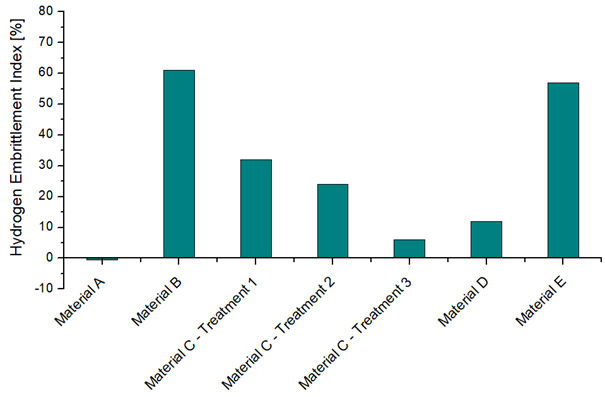
This was the starting point for setting up own investigations of HEE testing within the R&D framework of the EFRC. The test series includes materials that are frequently used in reciprocating compressor industry as well as new materials that are highly recommended for Hydrogen applications in other industries. The target was to create a comparable list of HEE of the different steel materials in respect of the conditions in recip applications.
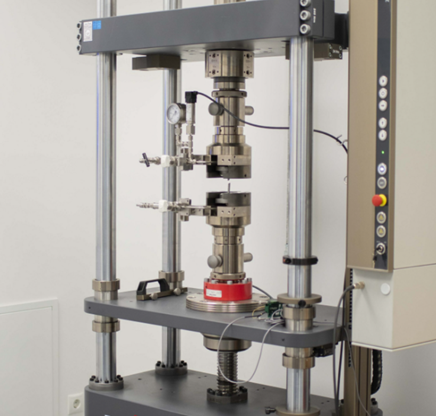
The test method chosen to perform this comparison was Slow Strain Rate Tests (SSRT) in accordance with the standards ISO 7039 and ASTM G129-21 (see Figure 2).