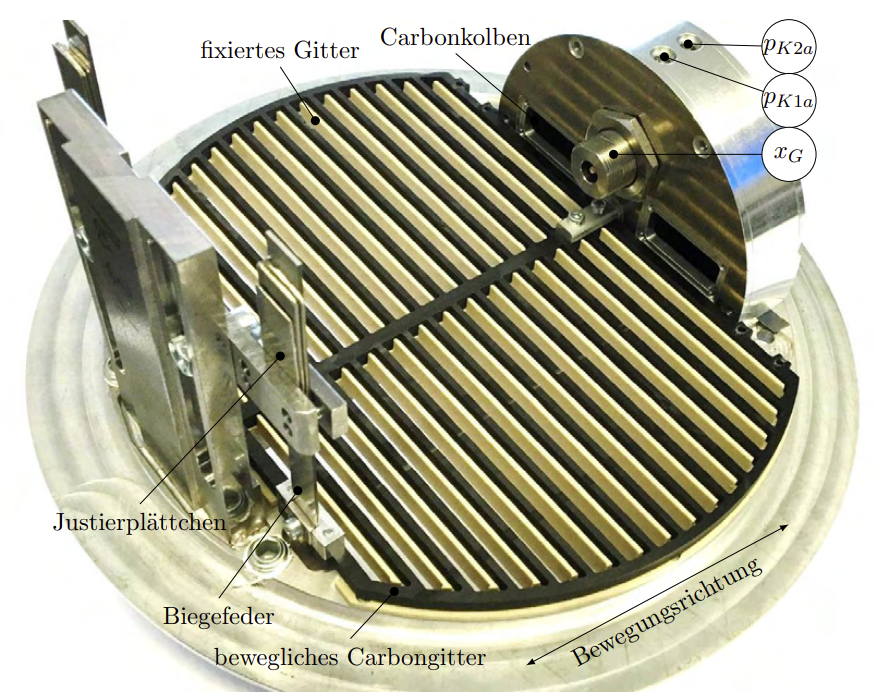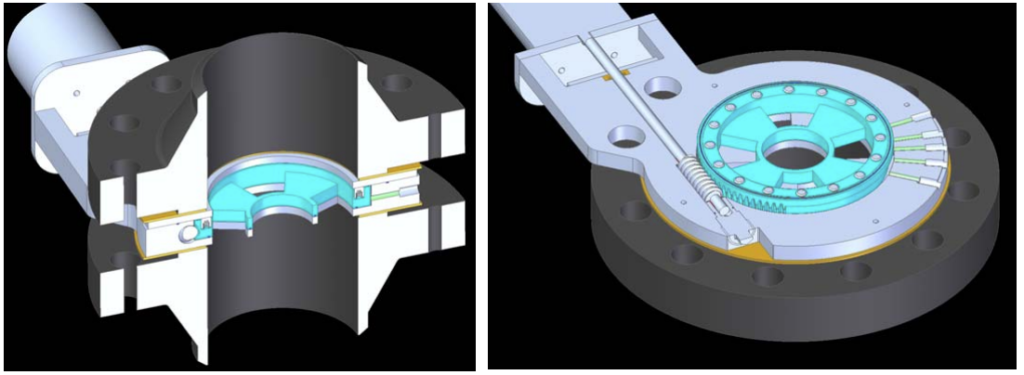

Reciprocating compressors are a common source of pulsations in piping systems, which are typically managed by orifice plates. However, these devices have fixed bore diameters, and do not perform consistently across the full range of the compressor’s operating conditions. At low capacities, they are less effective, and resizing them to improve performance at low flow often results in excessive pressure loss at high capacities. This issue is especially relevant in green hydrogen projects, which frequently operate at low capacities. Therefore, an adaptive restriction orifice could be an effective solution for optimally suppressing pulsations, while minimizing pressure losses.
In this inventory, several relevant references and patents were collected, along with interviews with experts, end-users and manufacturers. The collection was relatively limited, as the application is not yet widely adopted. Even among users who have opted for a dynamically adjustable device, most operate them at fixed settings. Some have used standard control valves, but these require a higher capital investment and are challenging to install at optimal locations. From the end-user experiences though, no vibration problem or reliability issues have been reported that would render adaptive restriction orifices unsuitable. Therefore, a systematic benchmark is needed to quantify for the potential energy savings and the effectiveness of the device in reducing pulsations, in order to encourage a broader implementation.